


Categorías: Bandeja portacables galvanizada en caliente
Dimensions (Width × Height, Unit: mm):
(1) Height 50 series: 100×50, 150×50, 200×50, 300×50, 400×50
(2) Height 100 series: 100×100, 150×100, 200×100, 300×100, 400×100, 500×100, 600×100, 800×100
(3) Height 150 series: 200×150, 300×150, 400×150, 500×150, 600×150, 800×150, 1000×150
(4) Height 200 series: 300×200, 400×200, 500×200, 600×200, 800×200, 1000×200, 1200×200
(5) Extra‑long span / Special widened cable tray for power plants: 1000×100, 1000×150, 1000×200, 1200×200
Plate Thickness (Unit: mm): 1.0/1.2/1.5/2.0/2.5/3.0/3.5
I. Product Definition
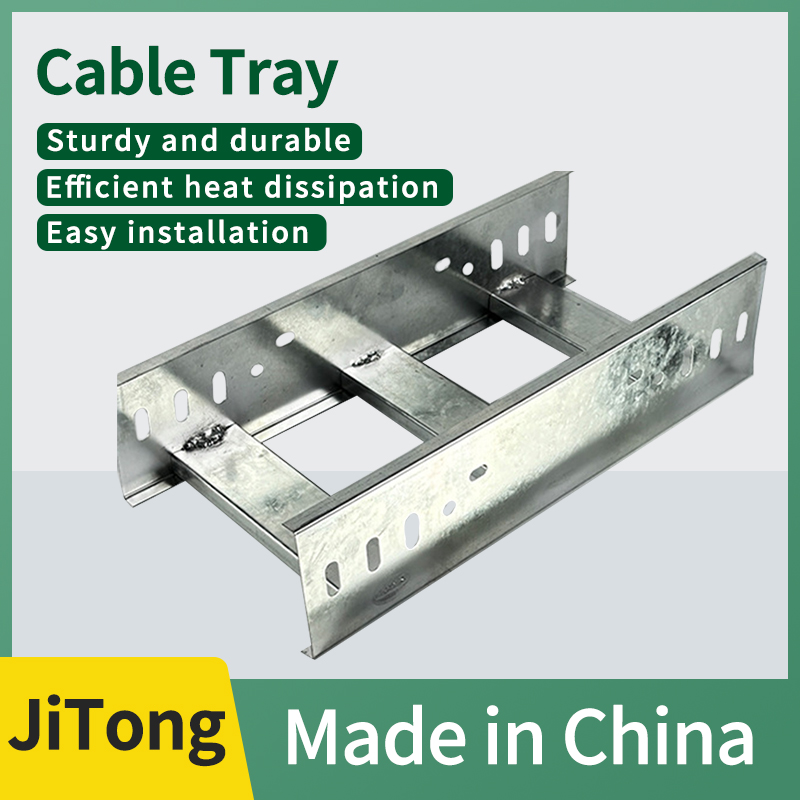
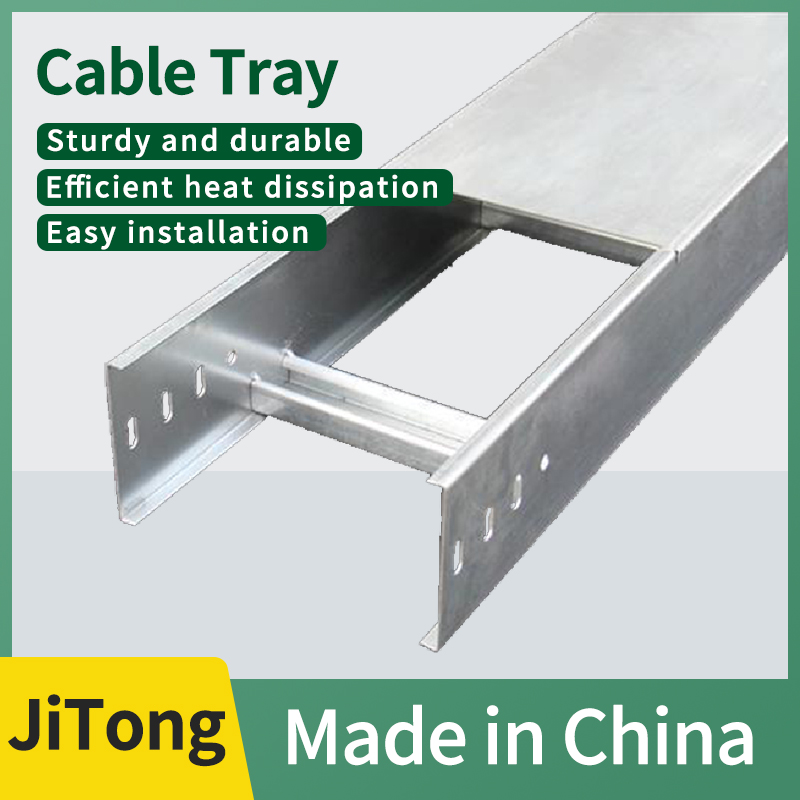
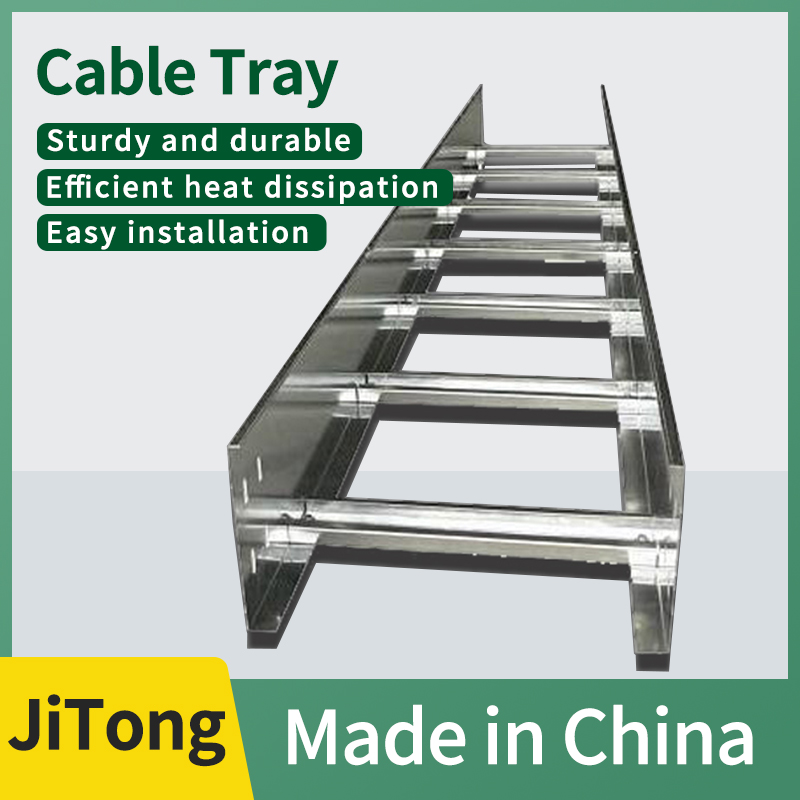
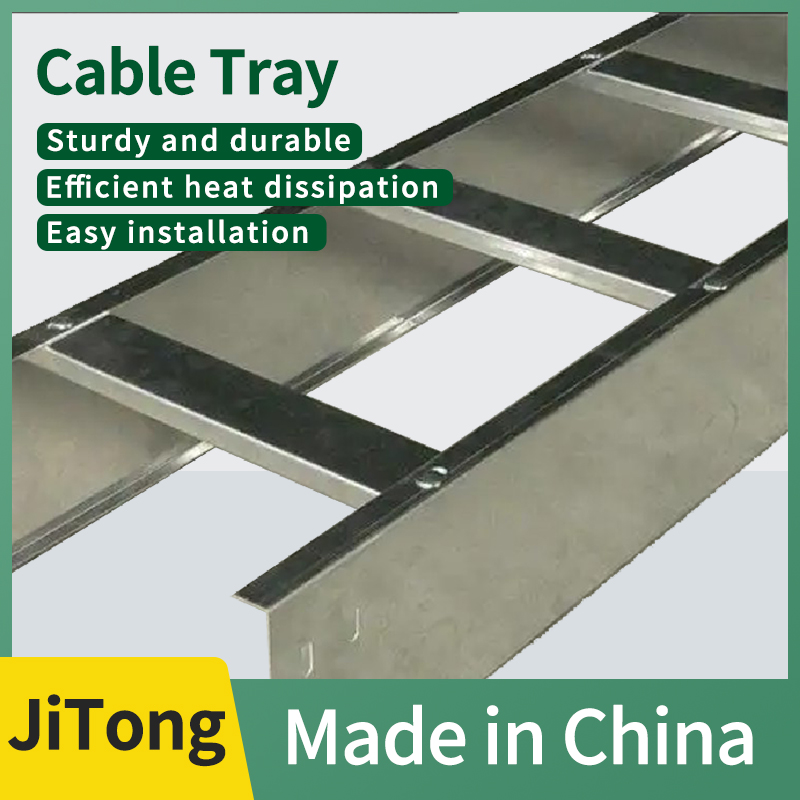
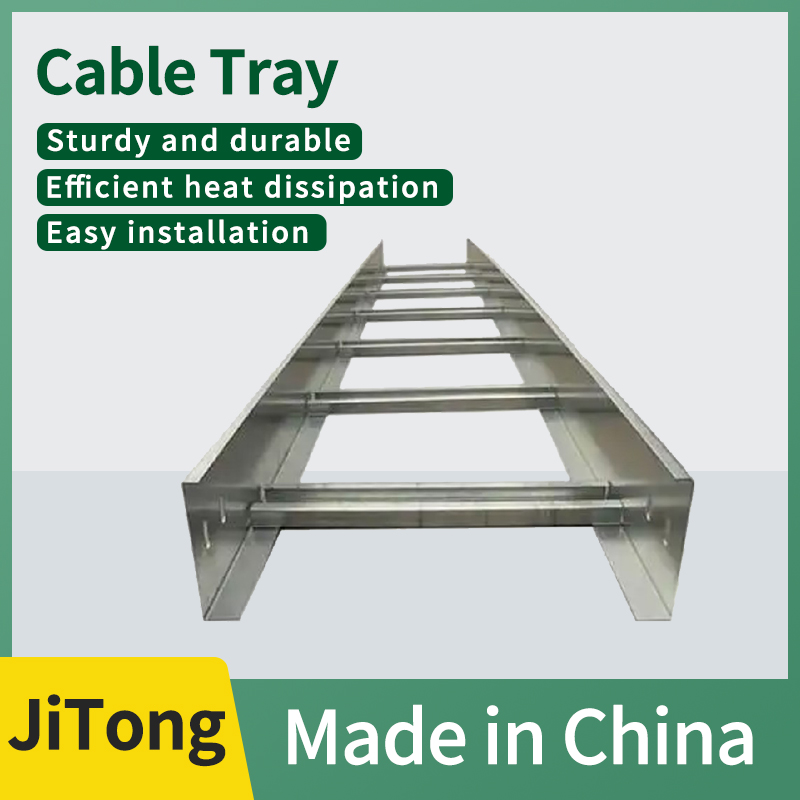
La bandeja portacables tipo escalera galvanizada en caliente está hecha de sustrato de acero al carbono Q235. Se caracteriza por un marco abierto en forma de escalera compuesto por dos largueros laterales longitudinales y peldaños de escalera soldados transversalmente. Después de la fabricación general, la bandeja se sumerge en una solución de zinc fundido a 450-480 ℃ para un tratamiento anticorrosión de galvanización en caliente. Se suministra con un juego completo de accesorios galvanizados en caliente que incluyen codos, T, soportes y pernos de conexión. Diseñado para disipar el calor de cables de gran tamaño y soportar cargas pesadas con resistencia a la corrosión en exteriores a largo plazo, sirve como bandeja principal para la instalación de cables de alimentación de alto y bajo voltaje.
II. Production Process
1. Ladder Frame Forming Procedure
Steel plate cutting → side edge bending forming → rung stamping → full penetration welding between side rails and rungs → hole punching (connecting holes, lifting holes) → fabrication of special‑shaped components such as elbows, reducers and cross pieces.
Standard rung spacing: 150 mm / 200 mm / 300 mm. Rungs are densely arranged for heavy‑duty versions to improve load‑bearing capacity.
2. Hot‑dip Galvanizing Anti‑Corrosion Process (same as hot‑dip galvanized trough‑type cable tray)
Degreasing & oil removal → pickling & rust removal → flux activation → immersion in high‑temperature zinc bath for 3‑5 minutes → zinc throwing & cooling → passivation and inspection.
Total zinc coating thickness ≥ 65 μm, coating mass ≥ 610 g/㎡. A metallurgically bonded zinc‑iron alloy layer plus pure zinc outer layer is formed, resisting peeling and flaking upon impact.
Salt spray test performance reaches over 3000 hours, far superior to electro‑galvanizing (zinc coating only 5‑15 μm).
III. Core Structures & Accessories
1. Main body: Straight ladder‑type cable tray.
2. Direction‑changing fittings: Horizontal 90° elbow, horizontal 45° elbow, vertical up‑elbow, vertical down‑elbow, tee, cross, reducer, divider plate.
3. Installation auxiliary materials: Hot‑dip galvanized connection plates, bolts & nuts, support brackets, upright posts, earthing jumpers
Optional accessories: Matching galvanized cover plates (installation renders performance close to trough‑type trays, balancing heat dissipation and dust prevention), fire‑resistant divider plates.
IV. Core Advantages
1. Excellent Open‑Type Heat Dissipation (Most Distinct Feature)
The open and permeable structure provides ample air circulation space, quickly dissipating operating heat from cables. It effectively lowers cable temperature rise and prevents overheating‑induced aging of high‑current cables, suitable for dense laying of high‑voltage and large‑cross‑section power cables.
2. Light Weight with High Load‑bearing Capacity
It consumes approximately 30 % less material compared with trough‑type trays of identical specifications, facilitating transportation and hoisting. The welded frame formed by side rails and rungs delivers favorable mechanical performance. Heavy‑gauge versions achieve uniformly‑distributed load capacity above 500 kg/m, applicable for thick high‑voltage cables and multi‑circuit power cables.
Long‑term Anti‑corrosion Performance via Hot‑dip Galvanizing for Harsh Environments
3. The thick metallurgically‑bonded zinc coating provides sacrificial anode protection. Zinc corrodes preferentially at scratches and cut surfaces to safeguard steel substrates. It resists salt spray, humidity and mild acid‑alkali corrosion, applicable in coastal areas, chemical plants, open‑air sites and tunnels with service life of 15‑20 years.
4. Convenient Cabling & Maintenance
Without enclosed trough housings, cable laying, subsequent cable addition or removal and fault inspection can be completed without cover disassembly. Visible layout greatly cuts construction and maintenance man‑hours.
5.Cost‑effective
Under equivalent anti‑corrosion grades, it uses less raw material and features lower procurement cost than hot‑dip galvanized trough‑type trays of the same specification.
V. Application Scenarios
1. Power plants, substations, boiler houses, metallurgical plants (high‑temperature, high‑current high‑voltage cables)
2. Chemical industrial parks, wastewater treatment plants, coastal wharves, offshore wind power (high humidity, salt spray, mild corrosive conditions)
3. Outdoor overhead factory installations, utility tunnels, tunnels, main power cables in underground parking garages
4. Outdoor cable laying for photovoltaic and wind‑power project sites
5. Centralized installation of large‑cross‑section and multi‑circuit power cables, zones requiring frequent circuit inspection
VI. Construction & Installation Precautions
1. After on‑site cutting or drilling, all cut sections must be coated with zinc‑rich repair paint to prevent bare‑steel rusting.
2. All connecting bolts, brackets and upright posts shall adopt hot‑dip galvanized parts to avoid galvanic corrosion caused by dissimilar metals.
3. Equipotential bonding shall be implemented along long‑distance laying routes to ensure overall earthing continuity.
4. When strong‑current and weak‑current cables are laid on one tray, metal divider plates shall be installed for separation. Matching galvanized cover plates shall be fitted for dusty or rain‑exposed outdoor conditions.
5. For heavy‑load long‑span installation, adopt thicker‑gauge plates and densify support bracket points to prevent tray deflection and deformation.
Copyright © 2026 Hebei Jitong Cable Tray Co., Ltd. Todos los derechos reservados. privacy policy


