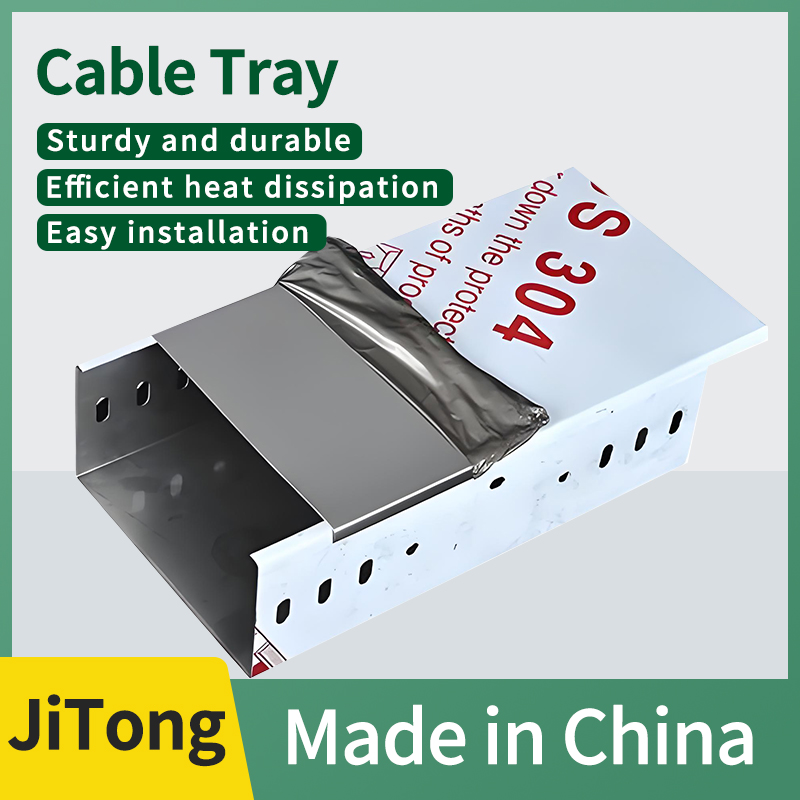
Dimensions (Width × Height, unit: mm):
(1) Height 50 Series: 100×50, 150×50, 200×50, 300×50, 400×50
(2) Height 100 Series: 100×100, 150×100, 200×100, 300×100, 400×100, 500×100, 600×100, 800×100
(3) Height 150 Series: 200×150, 300×150, 400×150, 500×150, 600×150, 800×150, 1000×150
(4) Height 200 Series: 300×200, 400×200, 500×200, 600×200, 800×200, 1000×200, 1200×200
(5) Extra‑long Span / Special Widened Cable Tray for Power Plants: 1000×100, 1000×150, 1000×200, 1200×200
Plate Thickness (unit: mm): 1.0/1.2/1.5/2.0/2.5/3.0/3.5
Ⅰ. Product Definition:
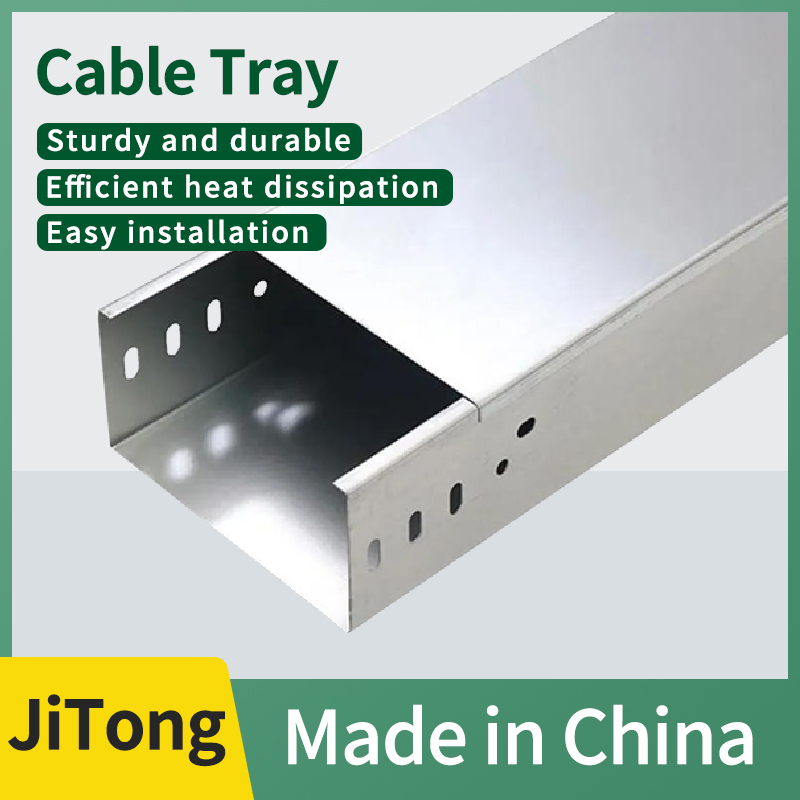
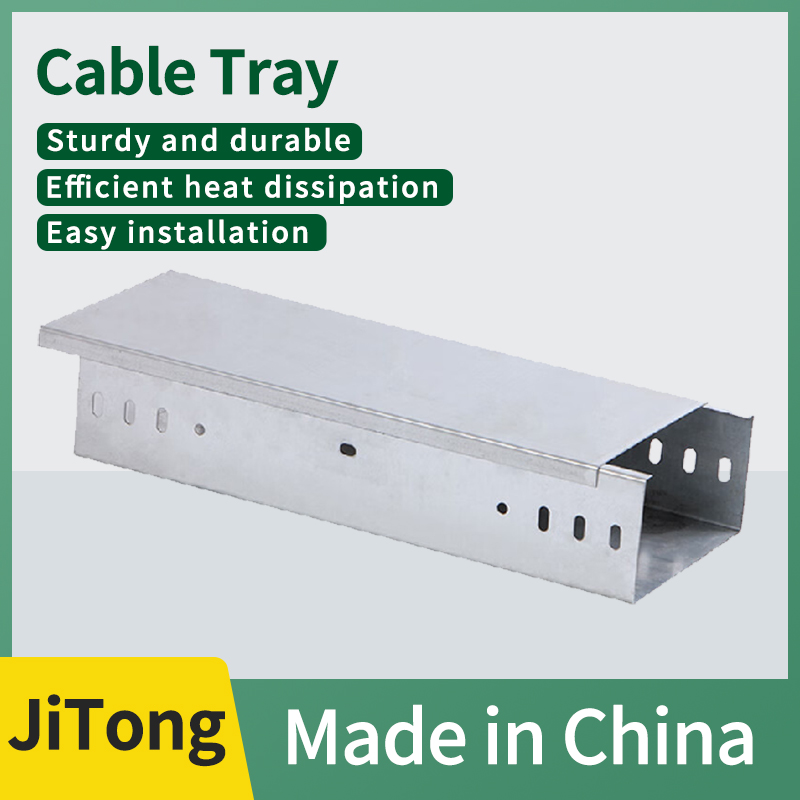
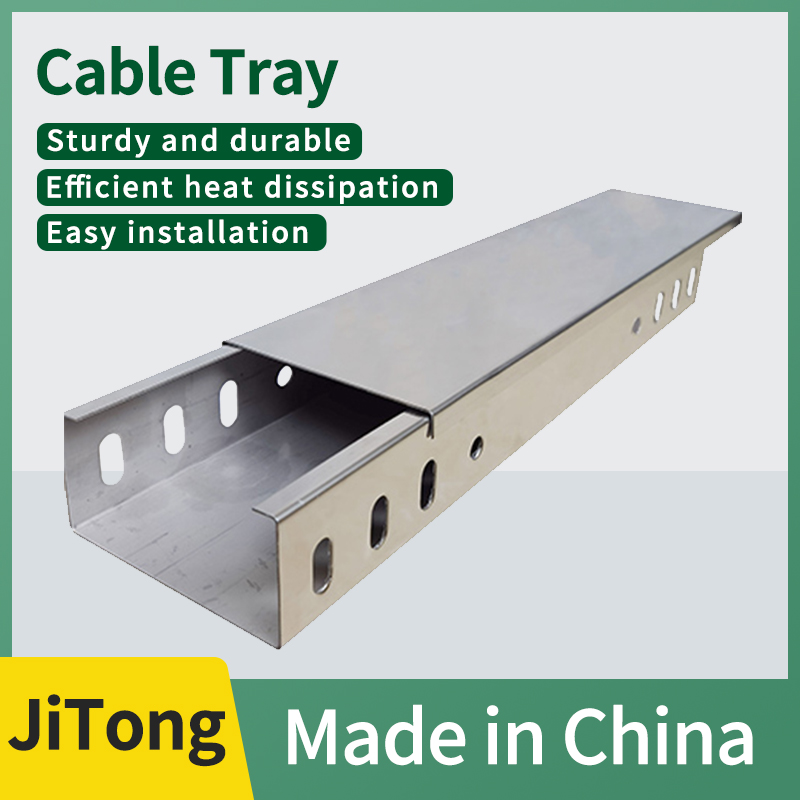
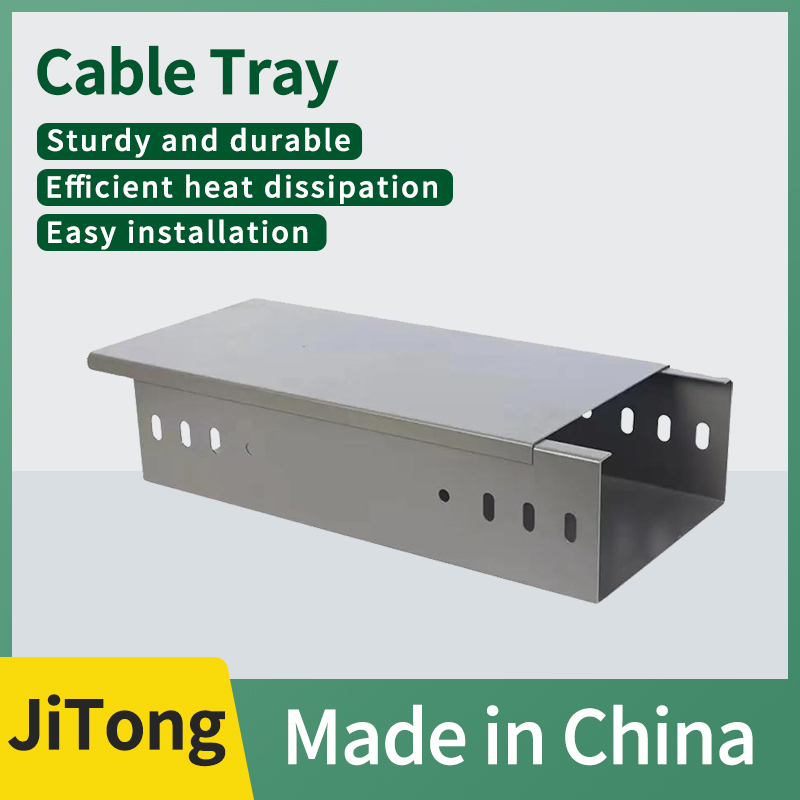
The stainless steel trough cable tray utilizes a fully enclosed U-shaped trough body that is integrally bent and formed from a single stainless steel plate through CNC technology. It is equipped with stainless steel cover plates of the same material and a full set of stainless steel connectors. The tray relies on the inherent corrosion resistance provided by the chromium-nickel passivation film on the stainless steel itself, eliminating the need for external coatings such as hot-dip galvanizing or powder coating. It combines four core characteristics: enclosed electromagnetic shielding, waterproof and dustproof, superior acid and alkali resistance, and salt spray resistance. It is a dedicated enclosed wiring carrier for high-corrosion environments such as coastal areas, chemical industries, food and pharmaceutical industries, and wastewater treatment.
Three major mainstream stainless steel materials and their applicable environments: 201 stainless steel, a chromium-manganese stainless steel, has the lowest cost; it is only suitable for use in dry indoor environments without corrosive weak electrical branches. It is prone to rusting in humid and mild salt spray environments, and is rarely chosen for industrial main lines.
304 stainless steel (06Cr19Ni10) contains 18% chromium and 8% nickel, forming a dense passivation film for rust prevention. It is resistant to atmospheric conditions, weak acids and alkalis, and mild salt spray. It offers the best cost-performance ratio and is commonly used in ordinary outdoor applications, food factories, and humid workshops. It is a mainstream choice in the market.
316/316L stainless steel (022Cr17Ni12Mo2) incorporates molybdenum, significantly enhancing its resistance to chloride ion corrosion. 316L is a low-carbon version, free from intergranular corrosion during welding, making it ideal for high chloride ion corrosive environments such as coastal docks, offshore platforms, electroplating, heavy chemical industries, and seawater sprinkling systems. It is the preferred choice for severely corrosive environments.
II. Complete Production Process Flow:
Integrated bending and forming of stainless steel coil material → Cutting; CNC bending and integrated forming of U-shaped grooves; deburring of edges and corners; pressing of longitudinal reinforcement ribs on the bottom for heavy-duty models; prefabrication of oblong connecting holes and lifting holes on side plates; simultaneous processing of a full set of irregular-shaped parts such as cover plates, bends, tees, reducers, etc.; full welding of welds followed by grinding and polishing.
National standard plate thickness specifications: For slot widths ≤150mm: slot body 1.0mm, cover plate 0.8mm; For slot widths between 150-300mm: slot body 1.2mm, cover plate 1.0mm; For slot widths ≥300mm or heavy-duty trays: slot body 1.5/2.0/2.5mm. Thickened standard single-section length is 2000mm, and 6m long large-span stainless steel slot trays can be customized.
After surface passivation and anti-corrosion treatment, degreasing and cleaning → acid pickling and passivation → neutralization in clean water and drying; the surface is divided into two types: HL brushed matte finish and BA mirror polish. The passivation film permanently adheres to the substrate, isolating it from moisture and corrosive media, thus eliminating rust at its source and eliminating the risk of coating peeling.
The accessories, including connecting pieces, bolts and nuts, support arms, columns, and divider plates, are all made of stainless steel of the same grade as the tank body, to prevent electrochemical corrosion caused by contact between dissimilar metals such as carbon steel.
III. Complete set of stainless steel accessories:
1. Straight-through accessories: thickened stainless steel connecting piece, 304/316 stainless steel bolt, stainless steel grounding braided strap;
2. Special-shaped turning pieces: 90° horizontal bend, 45° horizontal bend, vertical up/down bend, tee, cross, reducer;
3. Functional accessories: split-seal stainless steel cover plate, stainless steel metal divider plate, fireproof partition plate;
4. Support system: stainless steel bracket arm of the same material, stainless steel column, seismic support and hanger.
IV. Six Core Advantages
1. Original growth long-term corrosion resistance, with a service life far exceeding that of carbon steel bridge frames. It relies on its own passivation film for rust prevention, eliminating issues such as peeling and detachment of the zinc layer and spray coating layer. The service life of 304 in conventional environments is 20 to 30 years, while 316L can last for over 30 years in coastal chemical environments, significantly surpassing the 15 to 20-year lifespan of hot-dip galvanized bridge frames. It is resistant to seawater salt spray, acids and alkalis, sewage, and food cleaning water vapor, requiring almost zero maintenance in the later stages and eliminating the need for regular application of anti-corrosion repair paint.
2. Fully enclosed cavity with excellent electromagnetic shielding performance. The U-shaped groove and sealing cover plate form a metal shielding cavity, which isolates external alternating magnetic field interference and perfectly protects DCS instruments, optical fibers, and automatic control communication signal lines. It is specifically designed for chemical central control and precision laboratories with low-voltage applications.
3. The all-round waterproof, dustproof, and medium-resistant sealed structure blocks the intrusion of rainwater, acid and alkali mist, dust, oil, and cleaning fluid, with a standard protection level of IP54-IP55. It can be directly used in open-air sprinkling areas, high-humidity basements, and clean workshops.
The main body is non-combustible and resistant to high temperatures, with outstanding fire safety performance. The melting point of stainless steel is approximately 1400℃. It is inherently non-combustible and will not melt, drip, or release toxic smoke in a fire environment. Compared to spray-painted/fire-resistant coated cable trays, there is no issue of coating peeling or failure at high temperatures, meeting both wiring protection and fire resistance requirements.
4. The surface is smooth and easy to clean, suitable for clean and sterile environments. The brushed/polished surface is free of rust residue, allowing direct water washing and wiping in food and pharmaceutical sterile workshops without generating zinc powder or rust residue that could contaminate the production line, thus meeting hygiene inspection standards.
5. On-site wire modification construction is simple, and there is no need for anti-corrosion repair or hot-dip galvanizing for the cross-section. The cutting cross-section of the spray-painted bridge frame must be coated with repair paint. Stainless steel only requires simple grinding and leveling, and the passivation film can be slowly repaired by itself. It has obvious advantages in outdoor scenarios where frequent on-site hole opening and wire modification are required.
Ⅴ. Applicable Scenarios:
1. Coastal ports, offshore wind power, coastal industrial areas, seawater desalination plants, and ship platforms (316L is mandatory in high chloride ion salt spray environments);
2. Chemical, oil refining, electroplating, pharmaceutical, and wastewater treatment plants (acid-base, wastewater corrosion workshops);
3. Food and beverage, brewing, and dairy aseptic clean production workshops (requiring water washing and no rust contamination);
4. Chemical central control, precision laboratories, DCS computer rooms, and communication fiber optic weak current backbone (shielding requirements);
5. Swimming pools, hot springs, spraying workshops, and underground high-humidity pipe trenches with long-term outdoor wiring;
6. Unattended outdoor pipe corridors and projects that cannot undergo regular anti-corrosion maintenance.
VI. Key Points of Construction and Installation Specifications
1. Unified Material for the Entire System: The brackets, columns, connecting bolts, and connecting pieces must be made of stainless steel of the same grade. It is strictly prohibited to mix carbon steel accessories to avoid electrochemical corrosion.
2. Grounding Requirements: Each section of the cable tray must be interconnected using stainless steel braided straps and fully connected to the grounding main line, ensuring an overall grounding resistance of ≤4Ω.
3. Post-cutting and Polishing Treatment: The metal fracture surface should be polished smooth. In severe corrosion environments, local passivation treatment may be applied, eliminating the need for anti-corrosion paint.
4. Strong and Weak Electricity Laying in the Same Trough Must Be Completely Isolated by Installing Stainless Steel Dividers, and Sealed Cover Plates Should Be Added Throughout the Process.
5. For Long-distance Outdoor Laying, Expansion Joints Should Be Installed to Compensate for Stainless Steel Thermal Expansion and Contraction Deformation, Preventing Deformation and Cracking of the Cable Tray.
6. Cable Trays Passing Through Walls and Floor Holes Should Be Equipped with Fire-proof Sealing Materials to Block the Spread of Flame and Smoke Along the Cable Tray Path.
7. For Heavy-duty Cable Trays with a Width of Over 600mm, Stainless Steel Bracket Support Points Should Be Densely Distributed to Control Deflection and Deformation Under Long-term Load.
8. After Installation in Food and Pharmaceutical Cleanrooms, the Entire Area Should Be Wiped and Polished to Remove Residual Metal Debris from Installation.